 HISTORIAPHIL
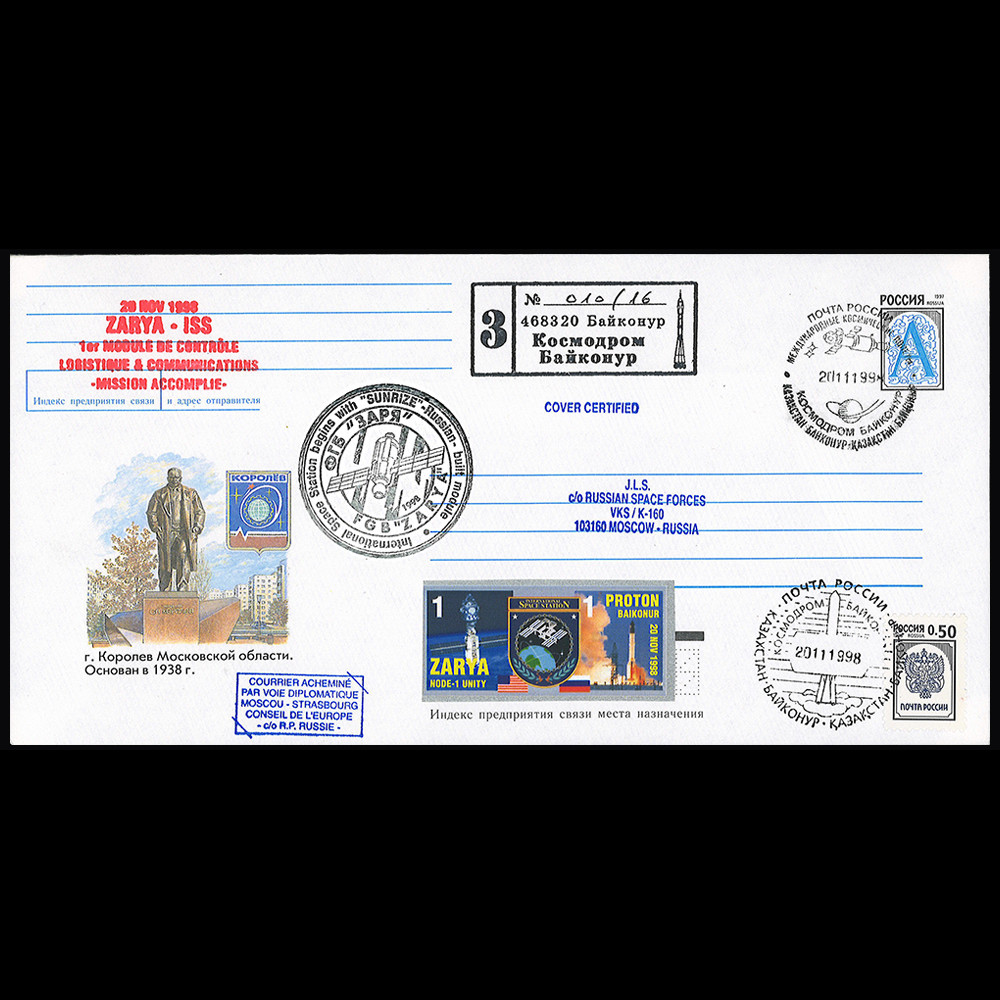
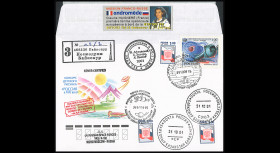
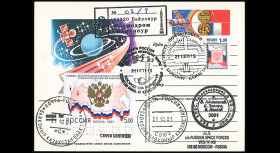
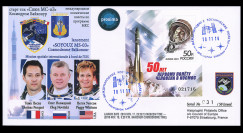
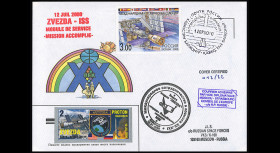
No. ZARYA-4: Postal Stationary Type 4 (PS) Russia 'A' Korolev, Father of Russian Cosmonautics "Launch of the First Russian Module - ZARYA NODE-1 ISS, 20.11.1998"
- 2 x illustrated cancellations "Cosmodrome Baikonur - Kazakstan" 20.11.1998
- Mission stamp "FGB - ZARYA"
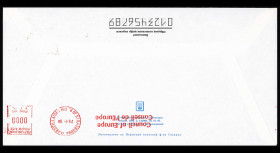
- Sent via diplomatic channels "Moscow - Strasbourg, Council of Europe" (arrival stamp on the back)
Collector's Edition - Edition of 16 numbered copies - Rare
Assembly of the ISS (1998)
The project to build a large orbital station was adopted on January 24, 1984, by President Reagan. From the outset, NASA solicited the participation of Europe, Japan, and Canada. The Freedom (later Alpha) station would serve as an observatory of the Earth and the Universe. It would specialize in scientific research and industrial development. The program underwent numerous upheavals, and it would not be until the year 2000 that crews would be able to reside there permanently.
In 1992, the U.S. Congress was preparing to guillotine the project following another cost overrun. Desperate, the Americans turned to the Russians, who were preparing to replace the Mir station. Thus was born a hybrid station project consisting of eleven Russian modules, to which eight components and the immense solar panel structure of the "Freedom" project were added. This new station was named the International Space Station "ISS."
Launch of the first Russian module, "ZARYA NODE-1," by Proton rocket
Assembly of the ISS began in November 1998, with the launch of the Russian module "FGB-ZARYA", intended to provide logistics and communications for the American module "Node-1 Unity," a true multi-junction element enabling future modules to be connected.
Data sheet
Specific References
You might also like
In the same category: